Labor Day 2026
To our members,
Labor Day is much more than just the unofficial end to summer. The United States celebrates the holiday on the first Monday in September in honor of the socioeconomic achievements of its workers.
Labor Day, an annual celebration of workers and their achievements, originated during one of American labor history’s most dismal chapters. In the late 1800s, at the height of the Industrial Revolution, the average American worked 12-hour days and seven-day weeks in order to eke out a basic living. Despite restrictions in some states, children as young as five or six toiled in mills, factories and mines across the country, earning a fraction of what their adult counterparts earned. People of all ages, particularly the very poor and recent immigrants, often faced extremely unsafe working conditions, with insufficient access to fresh air, sanitary facilities and breaks.
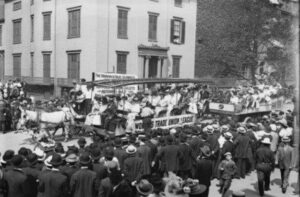
As manufacturing increasingly supplanted agriculture as the wellspring of American employment, labor unions, which had first appeared in the late 18th century, grew more prominent and vocal. They began organizing strikes and rallies to protest poor conditions and compel employers to renegotiate hours and pay. Many of these events turned violent during this period, including the infamous Haymarket Riot of 1886, in which several Chicago policemen and workers were killed. Others gave rise to longstanding traditions: On September 5, 1882, ten thousand workers took unpaid time off to march from City Hall to Union Square in New York City, holding the first Labor Day parade in U.S. history.
Eleven Random Facts About Labor Day:
The first Monday in September is celebrated nationally as Labor Day. So how did we get the holiday and why is no one quite sure who created it?

The Labor Day holiday grew out of the organized labor movement during the late 19th century, and it quickly became a national holiday as the labor movement assumed a prominent role in American society. Here’s how it all started, with the facts, as we know them, according to the Labor Department, the Library Of Congress, and other sources.
1. The idea first became public in 1882. In September 1882, the unions of New York City decided to have a parade to celebrate their members being in unions, and to show support for all unions. At least 20,000 people were there, and the workers had to give up a day’s pay to attend. There was also a lot of beer involved in the event.
2. The New York parade inspired other unions. Other regions started having parades, and by 1887, Oregon, Massachusetts, New York, New Jersey, and Colorado made Labor Day a state holiday.
3. How did the Haymarket Affair influence Labor Day? On May 4, 1886, a bomb exploded at a union rally in Chicago’s Haymarket Square, which led to violence that killed seven police officers and four others. The incident also led to May 1 being celebrated in most nations as Workers Day. The U.S. government chose Labor Day instead to avoid a celebration on May 1 and New York’s unions had already picked the first Monday in September for their holiday.
4. Two people with similar names are credited with that first New York City event. Matthew Maguire, a machinist, and Peter McGuire, a carpenter, have been linked to the 1882 parade. The men were from rival unions; in 2011, Linda Stinson, a former Labor Department historian, said she didn’t know which man should be credited — partially because people over the years confused them and due to their similar-sounding names.
5. Grover Cleveland helped make Labor Day a national holiday. After violence related to the Pullman railroad strike, President Cleveland and lawmakers in Washington wanted a federal holiday to celebrate labor — and not a holiday celebrated on May 1. Cleveland signed an act in 1894 establishing the federal holiday; most states had already passed laws establishing a Labor Day holiday by that point. Sen. James Henderson Kyle of South Dakota introduced S. 730 to make Labor Day a federal legal holiday on the first Monday of September. It was approved on June 28, 1894.
6. The holiday has evolved over the years. In the late 19th century, celebrations focused on parades in urban areas. Now the holiday is a celebration that honors organized labor with fewer parades, and more activities. It also marks the perceived end of the summer season.
7. Can you wear white after Labor Day? This old tradition goes back to the late Victorian era, where it was a fashion faux pas to wear any white clothing after the summer officially ended on Labor Day. The tradition isn’t really followed anymore. EmilyPost.com explains the logic behind the fashion trend — white indicated you were still in vacation mode at your summer cottage.
8. Labor Day is the unofficial end of Hot Dog season. The National Hot Dog and Sausage Council says that, between Memorial Day and Labor Day, Americans will eat 7 billion hot dogs.
9. How many people are union members today? According to the Bureau of Labor Statistics, there were 14.8 million union members in the workforce in 2017. There were 17.7 million in 1983.
10. What is the biggest union today? The National Education Association has about 3 million people who are members, including inactive and lifetime members.
11. V-J Day happened one day before Labor Day. Short for Victory over Japan Day, V-J Day is observed in the United States on the anniversary of the formal signing of the instrument of Surrender aboard the Battleship USS Missouri in Japan’s Tokyo Bay on September 2, 1945. The following day — September 3, 1945 — was Labor Day.
We must continue to remember that there are other people working around the world who are not celebrating this day here with us. Our Brothers and Sisters in the Military are working in a different manner to let us celebrate here.
Let’s have a wonderful Holiday and take time out to Say A Prayer for our Military and especially for the ones in Harm’s Way and hope next year they will be celebrating here with us.
God Bless You and God Bless America.
Kenneth J. Nevor
President/Chairman